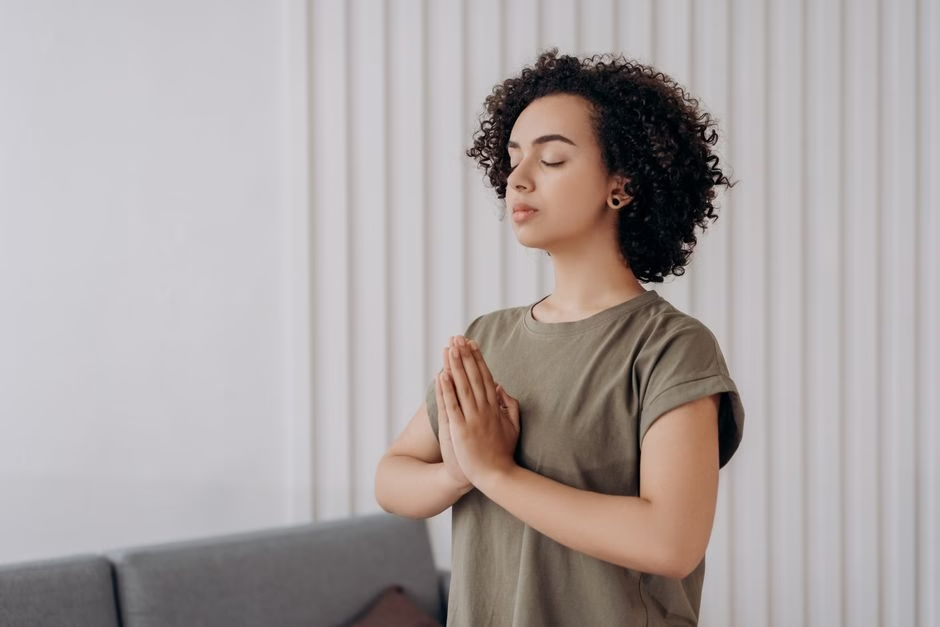
In our modern, fast-paced world, finding a moment of true stillness can feel like a luxury. We are constantly bombarded by digital notifications, endless to-do lists, and the general hum of daily life. Meditation is often held up as the ultimate solution for this restlessness, yet many people struggle to make it a consistent part of their lives. If you have ever started a meditation practice with great enthusiasm, only to find yourself stopping a week later, you are certainly not alone. Building a habit is not about willpower; it is about design.
Understanding the Goal of Meditation
Before we dive into the logistics of building a habit, it is important to clarify what meditation actually is. There is a common misconception that meditation requires you to empty your mind or reach a state of total enlightenment. In reality, meditation is simply the practice of training your attention and awareness. It is about noticing when your mind wanders and gently bringing it back to the present moment. Think of it like a bicep curl for your brain: every time you notice you are distracted and return your focus to your breath, you are strengthening your mental muscles.
This practice is a foundational pillar of Mental Health. Just as you would not expect to run a marathon without training, you cannot expect your mind to remain calm under pressure without regular practice. By approaching meditation as a skill rather than a performance, you remove the pressure to ‘do it right,’ which is often the biggest barrier to entry for beginners.
Start With Micro-Habits
The most common mistake beginners make is being overly ambitious. Attempting to meditate for 30 minutes a day when you have never practiced before is a recipe for burnout. Instead, aim to start with a ‘micro-habit.’ Commit to just two to five minutes of practice each day. This duration is small enough that it feels manageable even on your busiest days, yet it is long enough to provide a sense of grounding.
Consistency is far more important than intensity. Meditating for three minutes every day is significantly more beneficial for your brain than meditating for an hour once a week. By keeping the barrier to entry low, you make it much easier for your brain to say ‘yes’ to the habit, which helps reinforce the neural pathways associated with your new routine.
The Power of Habit Stacking
One of the most effective ways to ensure a habit sticks is through a concept known as ‘habit stacking.’ This involves pairing your new meditation practice with an existing habit you already do every single day without thinking. For example, you might choose to meditate immediately after brushing your teeth, while your morning coffee is brewing, or right after you put your phone on its charger at night.
Because your brain already has a strong neural pathway for the existing habit, ‘stacking’ meditation onto it acts as a mental trigger. You no longer have to rely on remembering to meditate; the completion of your previous habit serves as the cue. If you already prioritize Exercise & Fitness, you might consider meditating for a few minutes immediately after your post-workout shower. This creates a natural transition from physical movement to mental stillness.
Creating a Dedicated Space
While you can meditate anywhere, creating a specific environment can signal to your brain that it is time to shift gears. You do not need a dedicated meditation room or expensive equipment. It can be as simple as a specific chair, a corner of your living room, or even a particular cushion. If possible, try to keep this space relatively clear of clutter, as a chaotic environment can sometimes mirror a chaotic mind.
Think of this space as your personal sanctuary. When you sit in this spot, you are creating a context-dependent memory. Over time, simply sitting in that chair or on that cushion will begin to trigger a relaxation response because your brain associates the location with calmness and focus. This is a subtle but powerful way to reduce the friction of getting started each day.
Embracing the Reality of Distraction
Many people abandon meditation because they feel they are ‘bad at it’ when their minds wander. It is vital to understand that a wandering mind is not a sign of failure; it is the entire point of the exercise. You are practicing the act of noticing. When you realize your thoughts have drifted to your Stress Management concerns or what you need to pick up at the grocery store, you are actually succeeding. That moment of awareness is the meditation.
Instead of judging yourself for getting distracted, try to adopt an attitude of curiosity. Simply observe where your mind went, acknowledge the thought without attaching any emotion to it, and gently return your focus to your breath or your anchor. Treat your mind like a young puppy you are training—if it wanders off, you don’t get angry; you just calmly lead it back to where it needs to be.
Tracking Your Progress
Sometimes, seeing your progress in a tangible way can be a great motivator. You might want to use a simple paper calendar to put an ‘X’ on every day you complete your practice. This is often called the ‘Seinfeld strategy’—the goal is to keep the chain going. Seeing a streak of consecutive days can provide a sense of accomplishment that encourages you to keep showing up, even on days when you don’t feel particularly motivated.
Remember, if you miss a day, it is not a disaster. It happens to everyone. The rule of thumb in habit building is ‘never miss twice.’ If you miss one day, get back on track the very next morning. Life is unpredictable, and flexibility is a key component of long-term success. If you find yourself consistently struggling to keep the habit, consider whether the time of day you have chosen is truly sustainable for your lifestyle.
Focusing on the Process, Not the Results
In the beginning, it is easy to look for immediate changes—you might want to feel less anxious, more focused, or more patient right away. While many people do report feeling a sense of calm after a session, true mental shifts usually happen slowly, over weeks and months. If you go into every session demanding a specific result, you will likely be disappointed. Instead, try to view the meditation as a gift you are giving yourself, regardless of how the session ‘goes.’
Some days your mind will be quiet, and other days it will feel like a whirlwind. Both types of sessions are valuable. When you approach the practice with a sense of acceptance, you remove the pressure of expectation. This shift in perspective is often what turns a temporary interest into a lifelong practice.
Supporting Your Mental Health Holistically
Meditation does not exist in a vacuum. It works best when supported by other healthy lifestyle choices. Just as you might look to Nutrition & Diet to support your physical energy, meditation supports your emotional energy. Maintaining a balanced lifestyle provides a stable foundation from which your meditation practice can grow. When you are well-rested and nourished, it is naturally easier to focus during your quiet time.
It is also important to remember that meditation is a tool for wellness, not a replacement for professional care. If you are experiencing persistent feelings of overwhelming sadness, anxiety, or other concerns that impact your daily functioning, please reach out to a healthcare professional or a qualified mental health counselor. There are many evidence-based paths to wellness, and a doctor can help you determine the best approach for your individual needs. Meditation can be a wonderful complement to professional support, but it should never be seen as a substitute for it.
The Importance of Self-Compassion
Above all else, be kind to yourself. You are learning a new skill that involves untangling years of mental habits. There will be days when you feel frustrated, bored, or distracted. These are not obstacles to your practice; they are the substance of your practice. By meeting these moments with compassion rather than criticism, you are actually practicing the very mindfulness you are trying to cultivate.
If you find that your chosen method—such as focusing on your breath—feels unhelpful, feel free to explore others. Some people prefer guided meditations, while others enjoy body scans or walking meditations. There is no ‘right’ way to meditate. The best habit is the one that you actually enjoy enough to continue. By keeping it simple, starting small, and maintaining a gentle, curious attitude, you will find that meditation becomes a natural, welcome part of your day—a reliable refuge in a busy world.
Anchor Your Practice to Existing Rituals
The most effective way to ensure consistency is to leverage the psychological phenomenon known as habit stacking. Instead of trying to find a “new” time in your day to meditate, attach your session to a habit you already perform automatically. For example, commit to meditating for three minutes immediately after pouring your first cup of coffee or right after you brush your teeth at night. By linking your meditation to an established neural pathway, you reduce the cognitive load required to start, making it significantly easier to show up for your practice even on busy days.
Embrace the Micro-Session Approach
Many beginners abandon meditation because they set an unrealistic goal of twenty or thirty minutes, leading to burnout when life gets hectic. To build a habit that truly sticks, start with a “micro-session” goal of just sixty seconds. By keeping the barrier to entry remarkably low, you eliminate the excuse of “not having enough time.” Once you have successfully practiced for one minute daily for a few weeks, your brain will have normalized the routine, and you can gradually increase the duration. Success in building a habit is defined by frequency—showing up every single day—rather than the intensity of the session itself.
This article is for general educational purposes and is not a substitute for professional medical advice. Always consult a qualified healthcare provider about your individual health needs.