





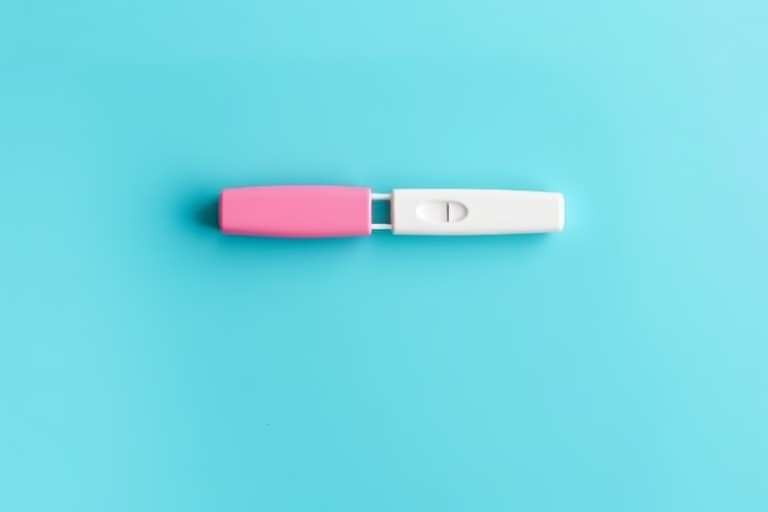
Understanding Implantation Bleeding and Pregnancy Testing
When exploring the relationship between pregnancy and menstrual cycles, a common question arises: can I test for pregnancy during implantation bleeding? Understanding the body’s processes can illuminate the mystery surrounding early pregnancy, including whether to trust testing results during this delicate time.
Implantation bleeding occurs when a fertilized egg attaches to the uterine lining, usually around 6 to 12 days after conception. This event may coincide with what many consider their monthly period. The bleeding is often lighter and shorter in duration than a typical menstrual cycle, which can lead to confusion about what is happening in the body. Many women wonder if they can take a pregnancy test during this period since traditional wisdom suggests waiting until a missed period for accurate results.
What is Implantation Bleeding?
Implantation bleeding typically happens in early pregnancy, and recognizing it is important. It is usually a small amount of light spotting or a pinkish-brown discharge.
This slight bleeding typically lasts from a few hours up to three days and is less than a period. Many women may mistake it for a light period or early menstruation.
Understanding this phenomenon is crucial because it signifies that implantation has occurred. Therefore, if you notice spotting within the expected range of your menstrual cycle and suspect you might be pregnant, it is essential to take note.
When Does Implantation Bleeding Occur?
Implantation bleeding occurs about a week after conception, which aligns with the expected date of your menstrual cycle. Tracking ovulation and understanding your cycle can help predict when implantation bleeding is likely to happen.
Generally, the timing differs for each woman. Here’s a simple overview of the cycle stages leading to possible implantation bleeding:
- Ovulation: Approximately 14 days before the next period
- Fertilization: Within 24 hours after ovulation when the sperm meets the egg
- Implantation: About 6 to 12 days post-fertilization
This timeframe varies for everyone, and some factors can influence it, including hormonal changes and cycle regularity.
How to Differentiate Between Implantation Bleeding and Menstrual Bleeding
Distinguishing between implantation bleeding and menstruation is vital for understanding your reproductive health. Consider the following aspects:
- Color: Implantation bleeding often appears pink or brown, unlike the bright red blood of a typical period.
- Flow: The flow is lighter than a regular period and often resolves within a few hours to a few days.
- Pain: Implantation bleeding may come with mild cramping, while menstrual cramps are usually more intense.
Recognizing these signs can be a helpful guide in identifying whether one is experiencing implantation bleeding or just a light flow before an expected period.
Can You Take a Pregnancy Test During Implantation Bleeding?
The question many women have regarding testing while experiencing potential implantation bleeding is legitimate. Technically, a pregnancy test can detect hCG hormones when taken during or after this bleeding occurs, but results may vary in reliability.
If taken too early, especially within a few days of experiencing bleeding, the test may yield inaccurate results. The best approach is to wait a few days after your expected period for more accurate results.
Results can be affected by:
- Timing: Waiting longer can improve accuracy.
- Type of test: Some tests are more sensitive than others.
- How the test is used: Following instructions is critical to obtaining the best results.
How Early Can You Detect Pregnancy?
Detecting pregnancy involves understanding hCG levels and how they rise after conception. Typically, hCG can be detected in urine approximately 14 days after conception. For those tracking cycles, this means tests are usually accurate about a week after a missed period.
Keep in mind that the sensitivity of the home pregnancy test can vary, and tests are not all equal. Some can pick up lower levels of hCG and might provide results a few days sooner.
Always refer to the product’s instructions and directions for the best results.
Importance of Knowing Pregnancy Symptoms
Recognizing pregnancy symptoms plays a crucial role in understanding changes within your body. Common early symptoms include:
- Missed period: Often the first sign of pregnancy
- Nausea: Morning sickness can begin as early as a few weeks after conception
- Breast changes: Swelling and tenderness can occur
It is wise to consider these symptoms, particularly when combined with potential implantation bleeding; this could indicate pregnancy.
Emotional Impact of Early Pregnancy Signs
Experiencing early signs of pregnancy can evoke various emotions—anticipation, anxiety, or uncertainty. Understanding the emotional aspects can help in managing feelings during this time. Many women feel a mix of hope and apprehension, especially when they suspect pregnancy without confirmation.
There is no right or wrong way to feel while navigating this possibility. Open communication with a partner or trusted individual can help process what these changes mean emotionally.
Consider journaling or finding support through community resources if feeling overwhelmed. Remember that taking care of mental health during this phase is essential.
Consulting Healthcare Providers
A visit to a healthcare provider can provide clarity and guidance when testing for pregnancy during implantation bleeding. Professionals can offer advice on testing, timing, and next steps.
Engaging in discussions about your cycle, symptoms, and any concerns can be highly beneficial. From blood tests to detailed ultrasounds, healthcare providers can give you accurate information based on individual health needs.
Final Thoughts
Understanding whether you can test for pregnancy during implantation bleeding involves recognizing the crossover of timeframes, symptoms, and testing accuracy. It is pivotal to be aware of personal health and circumstances while navigating these early stages of pregnancy. Timing matters when it comes to testing, as does accuracy in recognizing the signs of pregnancy and knowing when to seek medical advice.
By being informed about implantation bleeding, women can approach potential pregnancies with knowledge, reducing anxiety and confusion. Remember, if there are any doubts or concerns, consulting a healthcare provider is always a wise choice. Tracking cycles, being attentive to bodily changes, and reaching out for support can effectively handle the emotional and physical aspects of potential pregnancy.
Frequently Asked Questions
- Can implantation bleeding be heavy? No, implantation bleeding is typically much lighter than a regular period and lasts for a shorter duration.
- When should I take a pregnancy test if I suspect implantation bleeding? Ideally, wait about a week after the bleeding occurs for more accurate results.
- What color is implantation bleeding? It usually appears as light pink or brown rather than bright red.
- How long does implantation bleeding last? It can last from a few hours to three days.
- What should I do if I think I’m pregnant? Consider taking a pregnancy test after a missed period and consult a healthcare provider for confirmation and next steps.
Further Reading
What Type of Psychotherapy Is Best for Anxiety?