





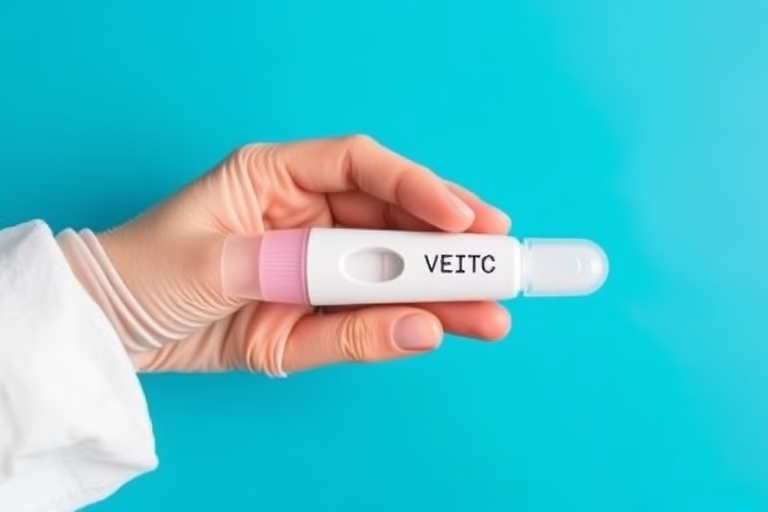
We will be talking about how soon after IVF transfer can you test positive. The IVF process, or in vitro fertilization, involves multiple steps, including ovarian stimulation, egg retrieval, fertilization, and placing the embryo back into the uterus, known as embryo transfer. Following the transfer, many women may feel anxious and want to know the earliest possible time to test for pregnancy to determine if the IVF cycle was successful. Understanding the timing for testing is critical, as testing too early can lead to false negatives. This article will clarify what you should know regarding IVF transfer and pregnancy testing.
The timing for testing positive after an IVF transfer can vary according to several factors. Commonly, professionals recommend taking a pregnancy test between 10 to 14 days after the transfer. This timeframe allows the body enough time to produce Human Chorionic Gonadotropin (hCG), a hormone that indicates pregnancy. Understanding when to take this test is crucial, as taking it too early may lead to inaccurate results, potentially affecting your emotional and psychological well-being. Hence, patience and awareness of your body’s signals ultimately play a vital role in this process.
Understanding the IVF Process
In Vitro Fertilization (IVF) is a complex reproductive technology. It starts with ovarian stimulation, where hormones are administered to facilitate the production of multiple eggs. Once the eggs are matured, they are retrieved, fertilized with sperm in a lab, and monitored for growth. After several days, viable embryos are transferred back to the uterus. Understanding this process is essential as outcomes rely heavily on the embryo quality, timing, and individual factors affecting each patient.
The IVF procedure can be both physically and emotionally taxing. Knowing the stages and what to expect helps reduce anxiety associated with the procedure. After the transfer, patience becomes key as the body needs time to respond.
Timing of the Pregnancy Test
The recommended time to take a pregnancy test after embryo transfer is typically between 10 to 14 days. Testing too early, especially before the day of your missed period, can lead to false results. Women who undergo IVF are often eager to get results and might feel tempted to test at home before the 10-day mark, however, it is always best to wait.
Your healthcare provider may suggest a blood test, which is more sensitive than a home urine test. Blood tests can detect lower levels of hCG earlier, confirming pregnancy sooner than home tests. Your doctor will schedule this test based on your individual transfer date, ensuring accurate and reliable results.
Understanding hCG Levels
Human Chorionic Gonadotropin (hCG) is the hormone that pregnancy tests detect. After the embryo implantation, the placenta begins to produce hCG, which can be measured in both urine and blood. The levels of hCG double approximately every 48 to 72 hours in early pregnancy, making it a critical marker in confirming pregnancy.
Low or falling levels can indicate a non-viable pregnancy or an ectopic pregnancy. Conversely, rising levels can confirm a healthy pregnancy. Monitoring hCG levels through blood testing can provide further insights into the viability of the pregnancy, which is common practice following IVF.
False Negatives and Their Implications
Taking a pregnancy test too early may lead to false negative results. This occurs when hCG levels are still too low for detection. Many women experience disappointment when they receive a negative result, only to find out a few days later that a positive result emerges when testing again.
It is essential to manage expectations during the wait time and communicate any worries or uncertainties with your healthcare provider. They can provide emotional support and direct you on when the optimal time to test is, reassuring you through this emotionally charged period.
Coping with the Emotional Roller Coaster
The journey through IVF can feel like an emotional roller coaster. The anticipation of testing for pregnancy brings a mix of excitement and anxiety. You may feel hopeful one moment and devastated the next. Understanding the typical timeline for testing and the bodily changes can help you better manage emotions.
Consider keeping a journal or talking to a therapist throughout this experience. Connecting with others who have undergone IVF can also offer comfort and help to normalize your feelings.
Post-Test Outcomes: What to Expect
Upon taking your pregnancy test, you will likely feel a mix of emotions, whether it results in a positive or negative outcome. If the result is positive, your doctor will typically schedule further tests to monitor hCG levels and assess the progression of the pregnancy.
If the test is negative, it may be a challenging moment. Understanding that this is a process and each cycle brings new possibilities is crucial. Healthcare professionals can guide you through next steps, whether preparing for another IVF cycle or choosing alternative paths for family building.
Final Thoughts
Understanding how soon after the IVF transfer you can test positive is essential for managing expectations and emotions during this critical time. Testing too early can result in misinformation and emotional distress, which is why timing your pregnancy test around 10 to 14 days post-transfer is generally advised.
With the knowledge of hCG levels, the importance of mental health support, and understanding the implications of test outcomes, you can feel more empowered throughout your IVF journey. Whether the results are positive or negative, remember that you are not alone, and many resources are available to support you.
Consult your healthcare provider, share your feelings, and take care of yourself during this challenging yet hopeful time. Every IVF journey is unique, and the search for answers, support, and success can continue even after a negative result.
Frequently Asked Questions
You can typically take a pregnancy test 10 to 14 days after the embryo transfer for accurate results.
A chemical pregnancy is a very early miscarriage that occurs shortly after implantation, often detected by hCG levels showing a brief positive result before dropping.
If you get a false-negative result, it is advisable to wait a few days and test again or consult your healthcare provider, as hCG levels might still be developing.
Yes, stress can negatively impact IVF success rates; managing stress through support, relaxation techniques, and counseling is beneficial.
A blood test conducted by your healthcare provider is often more sensitive than a home urine test and is more reliable for early detection of pregnancy.
Further Reading
What Type of Psychotherapy Is Best for Anxiety?